When you go to Africa on an internship or study abroad, you are told to bring gifts. Presents for your teachers, your mentors, your patients, and even strangers that you encounter. Many of my fellow students brought an entire suitcase full of such gifts: trinkets and toys, bubbles, balls. Nothing of any true value or significance, simply items people can play with for a few hours before they get bored or the toy gets broken, whichever happens first.
In Sister Eubank’s talk titled Turning Enemies into Friends, she said, “I believe that the Lord often isn’t’ asking us for big, time-consuming gestures; He merely wants minutes of our time every day to help another person on their way.” She teaches that it is not what objects you bring and give away that are important; you are the gift. The toys will break, but memories of kindness, care, love, and understanding will last forever.
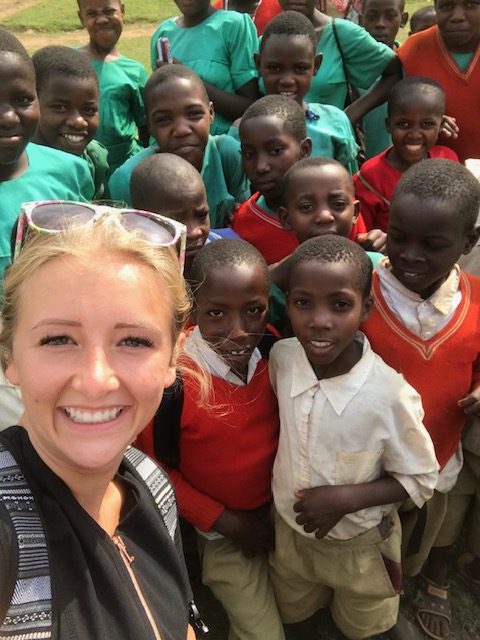
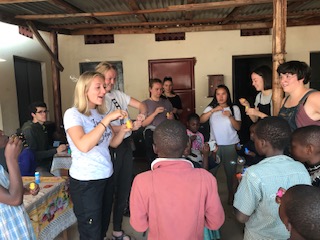
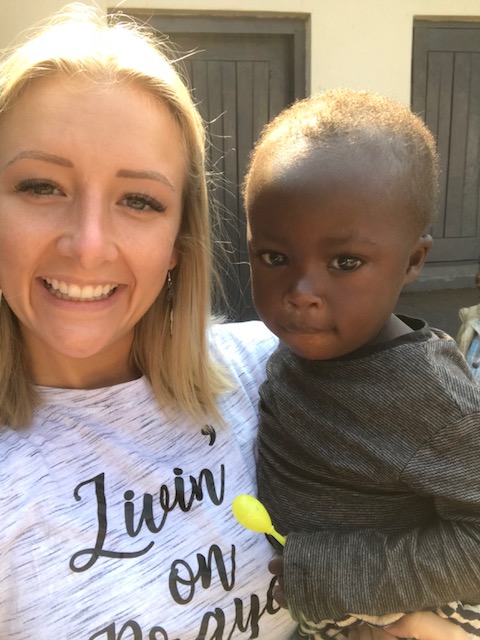
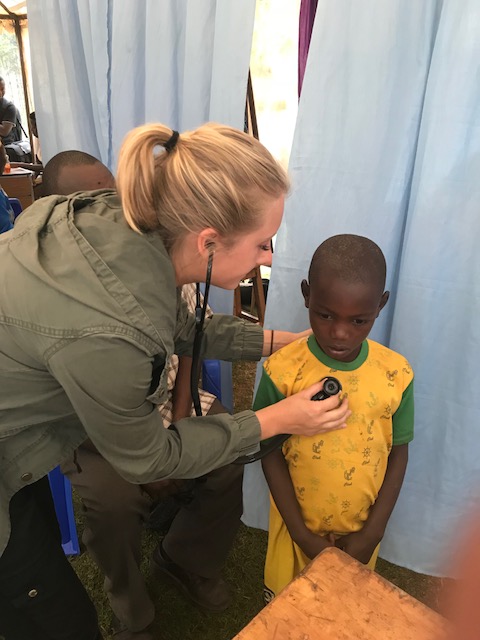
As I played with children in the nutrition center, I reflected on this principle. Instead of focusing on passing out the bubbles and bouncy balls, I tried to play with children individually. I gave them my time and my attention, my praise and my love. I did my best to make them feel special.
I hope that I was able to find success in my efforts, and create lasting memories for some of these children and parents. I know that I will never forget their faces, their beautiful smiles, and their shining countenances.
I wake up at 8 am every day in my apartment. With four girls
and two bathrooms, it’s a pretty nice place to stay. No cockroaches, few
mosquitos, and at 7,000 feet elevation it never gets too hot. We all have
breakfast in the pavilion. A staple of Ugandan cuisine is chapatti, which is
basically like a tortilla but even better. When you put an omlette on top of
chapatti and roll it up it’s called a Rolex, and it is my favorite thing to eat
for breakfast. Being so high up in the mountains means that mornings are
chilly, so throughout the meal I warm my hands on a bitter cup of hot chocolate
that the first week I thought was disgusting, but I now think is delicious. We
never know exactly when breakfast will be- 8:00, 8:30, sometimes even 9. Time
is relative here. If someone tells you breakfast is at 8, it really means it
could be anywhere from an hour before to, more commonly, an hour after.
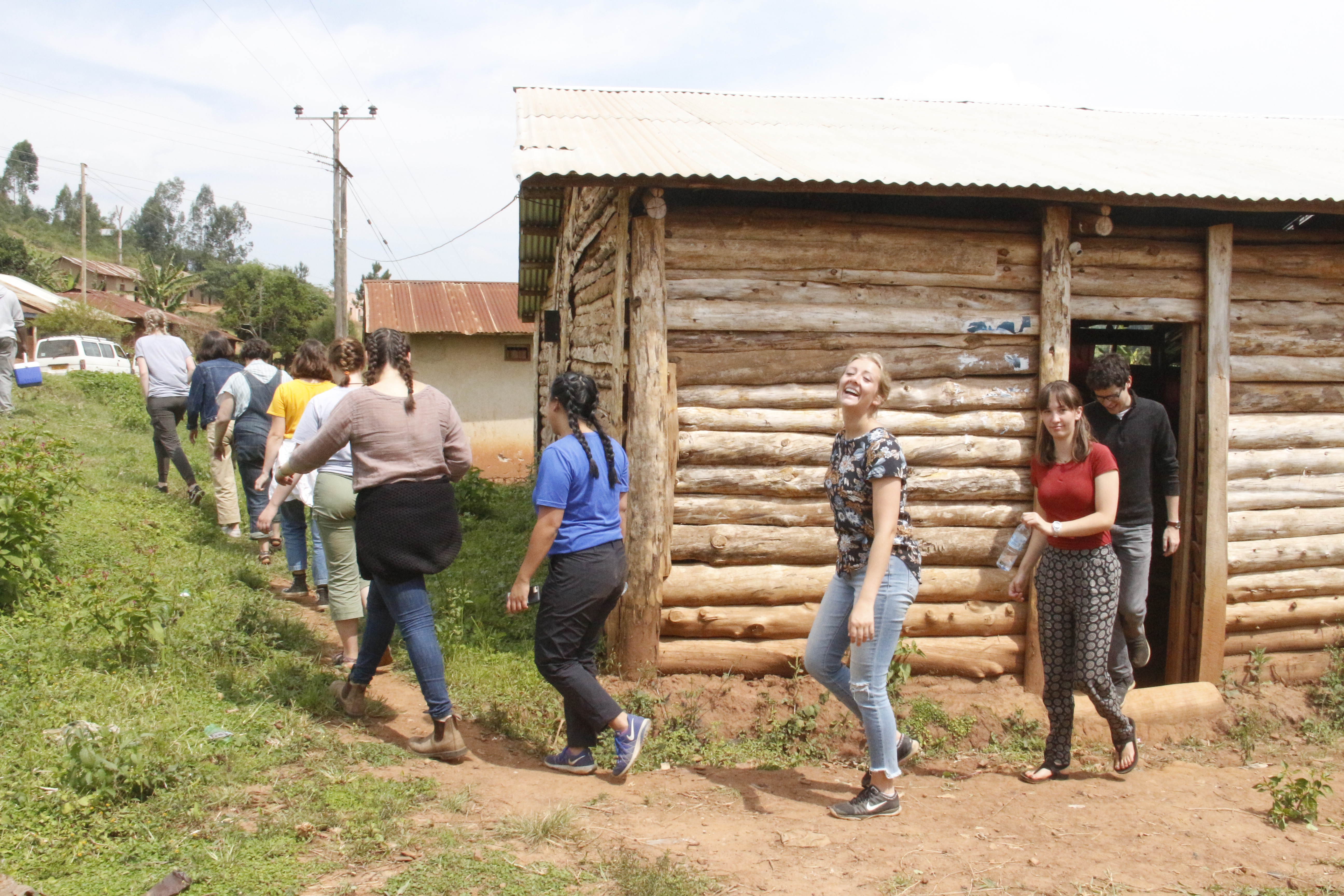
Today we did a rural outreach, where the healthcare
organization we are partnered with, KIHEFO, takes supplies and doctors and
medications to a rural community that doesn’t have access to medical care. We were
supposed to leave at 9 but the van arrived at 10 to take us into the field-typical.
Today’s outreach was in a town about an hour’s drive from our apartment in
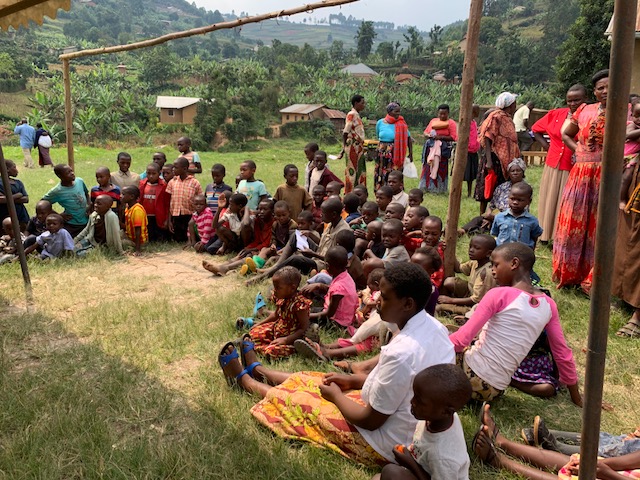
Kabale. We arrived to see hundreds of people gathered and waiting in line,
ready to be processed and treated. They had come on foot from neighboring towns
all over: children, adults, elderly, even the weak and ill. This was a rare
opportunity for them to find cures for things that had been paining them for
months, years, sometimes even decades. I went into the tents that had been set
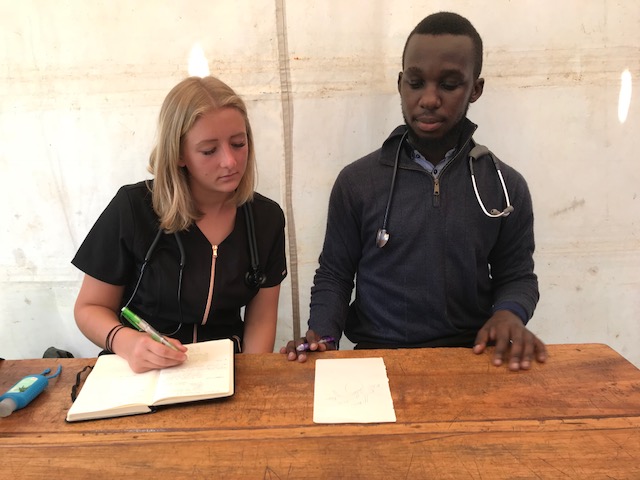
up for consultations and partnered with Bruce, a new Physician Assistant. For
the next six hours (with a quick lunch break), we saw patients and attempted to
diagnose them and provide them with treatment.
Bruce teaches me throughout the day, drawing diagrams in my
notebook and explaining conditions common in Uganda that I was unfamiliar with.
He lets me ask the patients questions and asks me what my diagnoses would be,
and we work together to puzzle out many interesting and unique cases. We send
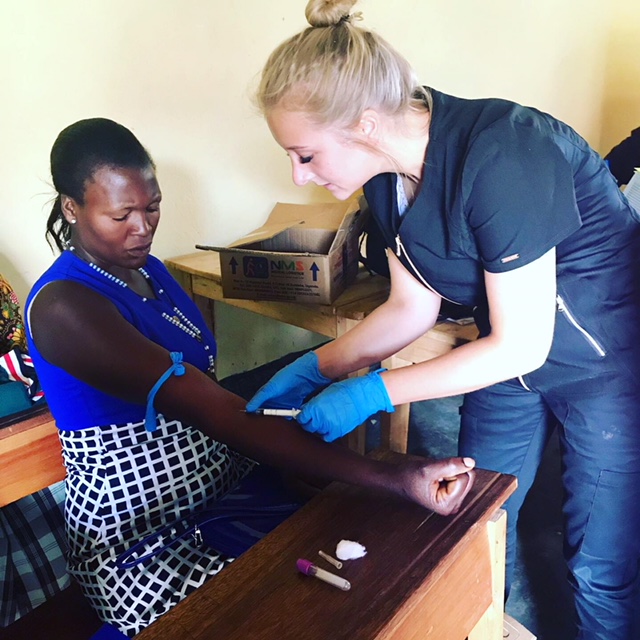
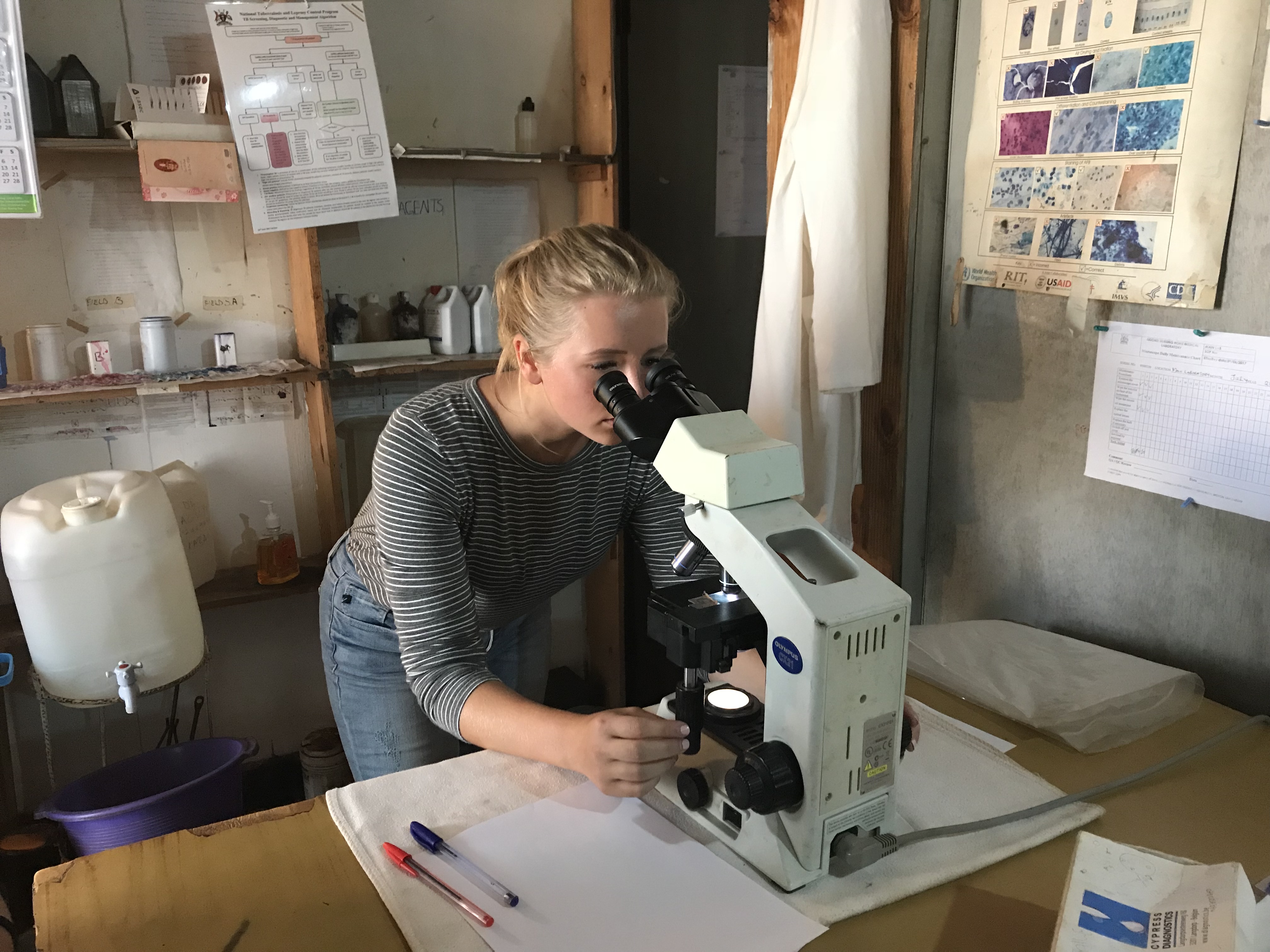
people to the lab setup in the adjoining building to test for conditions such
as HIV, malaria, syphilis, pregnancy, or do a urinalysis. They return to us
with the results that help us to more correctly diagnose. When we have
finished, we send them to the pharmacy tent to pick up their medications, or
give them a prescription to go to a pharmacy in town. Sometimes the cases are
too severe for us to treat, and we have to refer the patient to a hospital.
After 6 hours we have finally seen every patient, and our minds are exhausted,
but our hearts are light. It is incredible to know that you have helped save
someone from years of pain and suffering, for example through something as
simple as prescribing antacids.
We travel in the van back to the apartment. With a few hours to kill before dinner, we do things such as go to town for shopping, read, do homework, and above all- play cards. We LOVE cards, and they keep us distracted until dinner time. Rice, beans, chappati, and pineapple taste so good after a long day’s work. After dinner I took a warm shower and tucked myself into bed. We are not allowed to leave the apartment grounds after it falls dark around 7, and at night we bolt ourselves into our apartment and padlock the inside, so we know that we are safe. The night is chilly, and I snuggle under two blankets to stay warm. Tomorrow the whole process will repeat, in a different location with different patients and all sorts of new things to learn and to see.
This is Esther. She lives on a mountain a 3 hour walk from
the city of Kabale, where we are located. Esther got married when she was 18
years old to a man 15 years older than her. Over the years she gave birth to
five children that she and her husband raised together. But one night not long
after the births of her fourth and fifth children (twins), her husband beat her
half to death and left her, never to be heard from again. She was taken to the KIHEFO
clinic for treatment, where she remained in a coma and in critical condition
for days. While she was there, her house was robbed and she lost every single
thing she and her children owned. After recovering from her injuries, she returned
to her empty home. She had nothing: no bed, no blankets, no food, no water, no
money, no husband, no job, and no way to care for her children. But these
absences did not break her.
Esther reached out to the KIHEFO organization and was given
a job working in the Garden of Prosperity, a shop where single or struggling
women make clothing and souvenirs and sell them, receiving a large portion of
the sales to keep for themselves. Almost every day Esther wakes up at 5 in the
morning and makes the three hour trip on foot to Kabale. She works all day in
the shop, and then walks 3 hours back through the town and up the mountain to
her home. Through this enormous sacrifice, she is able to provide basic nourishment
for her children, and schooling for two of them. The rest cannot afford to go
to school, and spend their days working in their garden and hiking up and down
the mountain to fetch water from the stream. Despite her efforts, each of her
children struggled with malnourishment. The KIHEFO Nutrition Center helped
nourish her kids back to health and provide her with the knowledge and tools needed
to keep them fed and healthy. Though she sacrifices more than any woman should
ever have to for her children, her efforts still did not provide her with
everything she needed to raise a happy, healthy, and educated family. But now,
thanks to the power of 3 rabbits, she will.
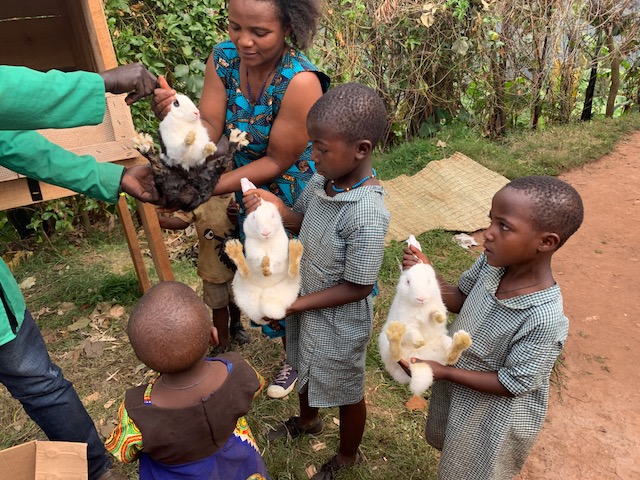
The KIHEFO rabbit program is a self sustainable project
funded by students like me. For $300, it is possible to construct a sturdy
raised rabbit cage and provide this and 3 rabbits for a family. We get the
materials, deliver them to a home, build the cage, deliver the rabbits, and
teach the family how to breed them. They eat basically anything green, so it is
easy and inexpensive to feed them. One rabbit produces an average of 8 bunnies
a month. Rabbits sell here for about 10,000 shillings each. School fees for an
entire year are only 30,000 shillings. You can use or sell their urine for
pesticide, and use their droppings for mulch. Rabbits are also a great source
of nutrition. By providing a family with these rabbits, they can be transported
from poverty and starvation to prosperity and health in a manner of months.
The students in my program and I were able to raise the
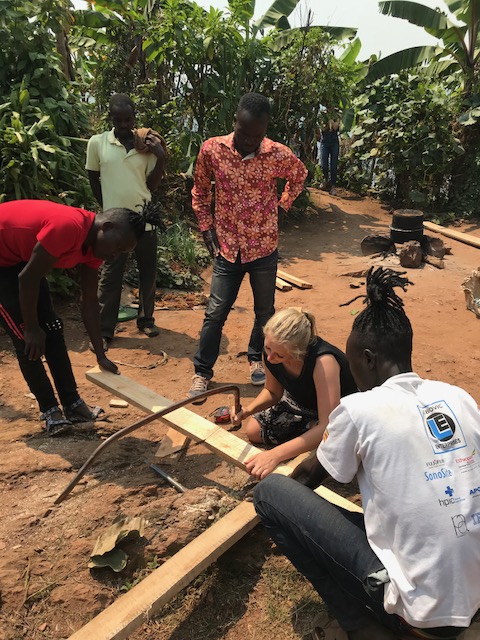
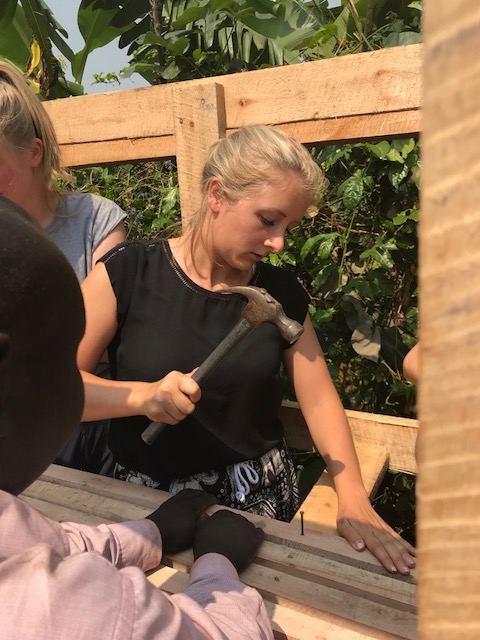
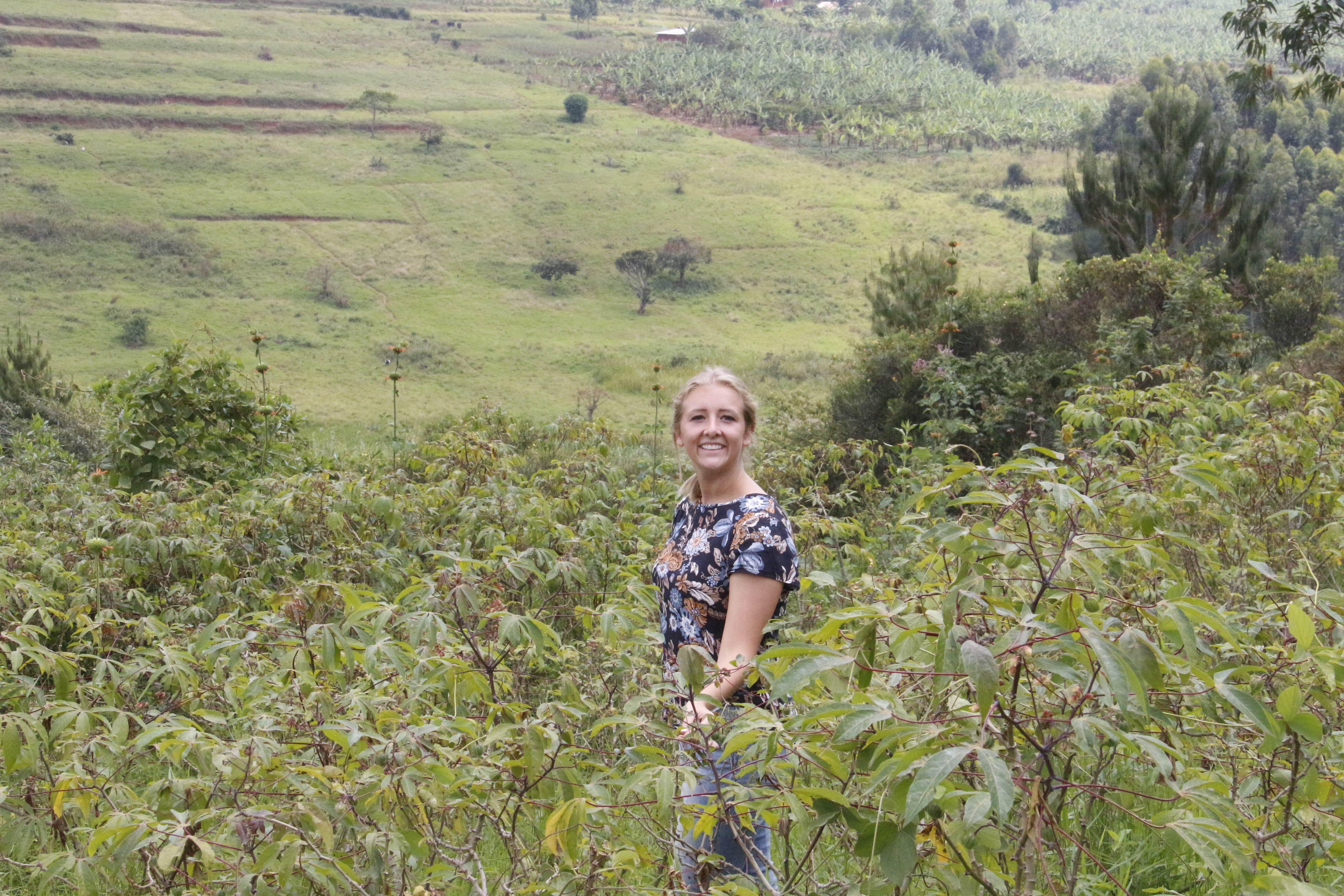
funds to build a rabbit cage for Esther. We hiked the mountain to her house
carrying the heavy wooden planks on our shoulders and built a cage using a handsaw,
hammers, and nails. The whole process took two days to complete. When we
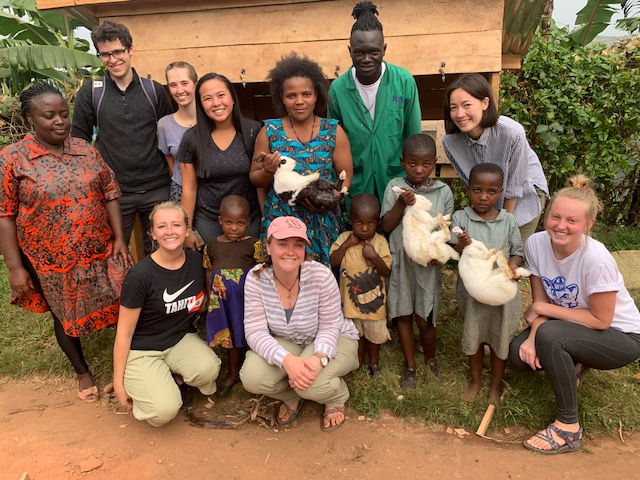
finished and presented Esther with the rabbits, my heart was overcome with
gratitude. Gratitude that people like Esther exist and give everything they have
and more for their children, gratitude that I was in a position to be able to
help them, gratitude for the opportunity to be in Africa and see a side of the
world that I had never seen before. Thanks to 3 rabbits, her entire life will
now change. After a few months, she won’t need to walk for 6 hours a day to
provide for her children. All of her kids will be able to afford school. They
can eat the rabbits and afford to buy even more food, saving her kids from
malnourishment. They can now grow up to be healthy and strong and educated. Everything
has changed for them through the power of 3 rabbits.
There isn’t anything we take for granted like water. Turn on a tap, flush a toilet, buy a bottle, walk to a drinking fountain: it is so easy, so simple, we don’t even notice it. Thirst is not an issue. Showers are not an issue. Cooking is not an issue. Unfortunately, these things are not true for everyone. I recently had my eyes opened to the hardship that follows when water is tough to come by. After a lecture on water supply and sanitation and a tour of the water sources around our area, we hopped into a car and drove to another region to study their water. We pulled up to the bottom of a hill so long and steep, the van we were in could not drive up. At the bottom of the hill was a protected well. This is the dry season, so water ran from it very slowly, trickling out.
The village that lived at the top of this enormous hill would walk down, wait in line, fill up their containers, and hike back up to their home. We started the long walk to the village. The first couple minutes were fine, but as the mountain got steeper and steeper my breathing intensified. I could not imagine hiking it carrying gallons of water: I didn’t have so much as a backpack on and I didn’t think I was going to make it. After finally reaching the top, we walked to a house that KIHEFO students and volunteers had built a water tank for. Water runs from a tin roof into a gutter, which drains into a giant water tank and provides water for a family all year long, without the need to trek up and down the mountain every single day. The elderly man who had been gifted the tank was so incredibly grateful, and so excited to show us exactly how it worked.
We next visited a family whose tank was built a mere two weeks ago. They are already reaping the benefits. Their injured elderly father no longer has to go down and fetch water, coming up with a container in one hand and a cane to help him walk in the other. The children can go to school because they no longer spend hours getting water. The mother can care for and clean her baby, and cook with water that is safe for her kids. This family’s life was completely changed by one water tank. These kids had a future handed to them because they can now go to school, and all it took was access to water.
On our way out, I saw a family with children who were not so fortunate. It had clearly been ages since these kids had bathed- they were covered in dirt from head to toe. What saddened me the most was when I noticed the flies that covered them, crawling on their lips and on their eyes. They were so used to it that they didn’t even feel them, or just didn’t bother to swat them away. It broke my heart to see these children suffering.
Water makes such a huge difference in disease and sanitation. Something as simple as personal hygiene can be the difference between life and death in areas like this. As we hiked back down the hill, I reflected on how many blessings I was born with that others were not. As a result of today, I aspire to be more grateful for what I have, and try not to take things like water for granted.
A half hour boat ride across the beautiful lake Bunyonyi
will bring you to an island inhabited by a small, but religious and superstitious
people. This is where we were introduced to a traditional healer, who forgoes
modern medicine in favor of herbal remedies and magic. His appearance surprised
me. He was covered in animal skins: a skunk skin on his head, a cheetah skin on
his chest, a deer skin on his back. But underneath the skins he was an ordinary
man, wearing a suit and a nice looking watch. It was an interesting mix of
modern and traditional. He had three wives, who worked on the island as birth
attendants.
He invited us into
his hut and (through a translator) began to explain how he cured different ailments.
He showed us the powders, mixes, seeds, drinks, and tools that he uses to cure everything
from the hiccups to being haunted by the spirit of a relative. He taught us events
that bring a curse on your family: if your livestock is hit by lightening, if a
girl gives birth while still living with her parents, and if someone dies that
you have unresolved issues with. The cure to these curses is a powder made from
different leaves. You mix it into bathwater, and the entire family has to bathe
in the tub to lift the curse.
If someone in your family goes crazy and is having mental
problems, there is a seed he gives you to slip into the family member’s food
and sedate them so they can be taken to the healer to be treated. If a woman’s menstruation
lasts too long, he puts a mixture of crushed leaves in water onto a wooden
stool. The woman sits on the stool and absorbs the mixture into her “private
parts” as our translator so delicately put it, and this will stop the bleeding.
If someone has cursed or poisoned you, he gives you a mixture to drink to make
you vomit out the poison or bad spirits.
The most interesting was the love potion. The healer gives you a sort of rock with sticks protruding from it. You follow the person you want to fall for you, and wait until they reach a crossroads in the street. After they walk, you go to the soil where they stepped and touch the rock to it. Then you gather the soil and bring it back to the healer. He mixes the soil with different ingredients and makes a fine powder. Then, you slip the powder into the food of that person. When they eat, it, they are supposed to fall in love with you. I would love to read a google review on this from someone who has tried it! It was so interesting to hear the beliefs and superstitions of the island’s natives. I learned so much about the people and their culture. When we were leaving, I saw that the healer had taken off his skins and was wearing a fedora on his head where the skunk skin had previously been, which I thought was hilarious. It was an amazing and very informative day! Sorry I can’t get any pictures to upload from my phone right now
After a week filled with
hours upon hours of orientation, lectures, learning, and cultural baptism by
fire, we escaped Kabale to travel to Mburo national park for a safari! We left
early Friday morning and drove for hours until we reached the park. Most of the
time when we take long drives I squeeze in a nice long nap. But this drive I
decided to really pay attention to my surroundings and see what I could learn about
the culture through the car window using only my eyes.
I think my favorite part of this driving
experience were the little children. Any time the little ones would make eye
contact with us, a big smile spread across their faces and they would wave to
us and yell “Hello!” or “How are you?”. It was the cutest thing, and their
smiles would get even bigger when we would smile and wave back. I loved
watching the kids dressed up in uniforms on their way to school, so excited to
go and learn. They stick together in groups for the most part, with a few brave
children walking alone.
Sometimes it is strange to be the only white face in a sea of black. Everyone stares; children, grandparents, mothers, women, and of course most of all, men. When the children stare and yell it’s cute: when the men do it, not so much. We have learned to either ignore or laugh off the ridiculous comments that we get every day.
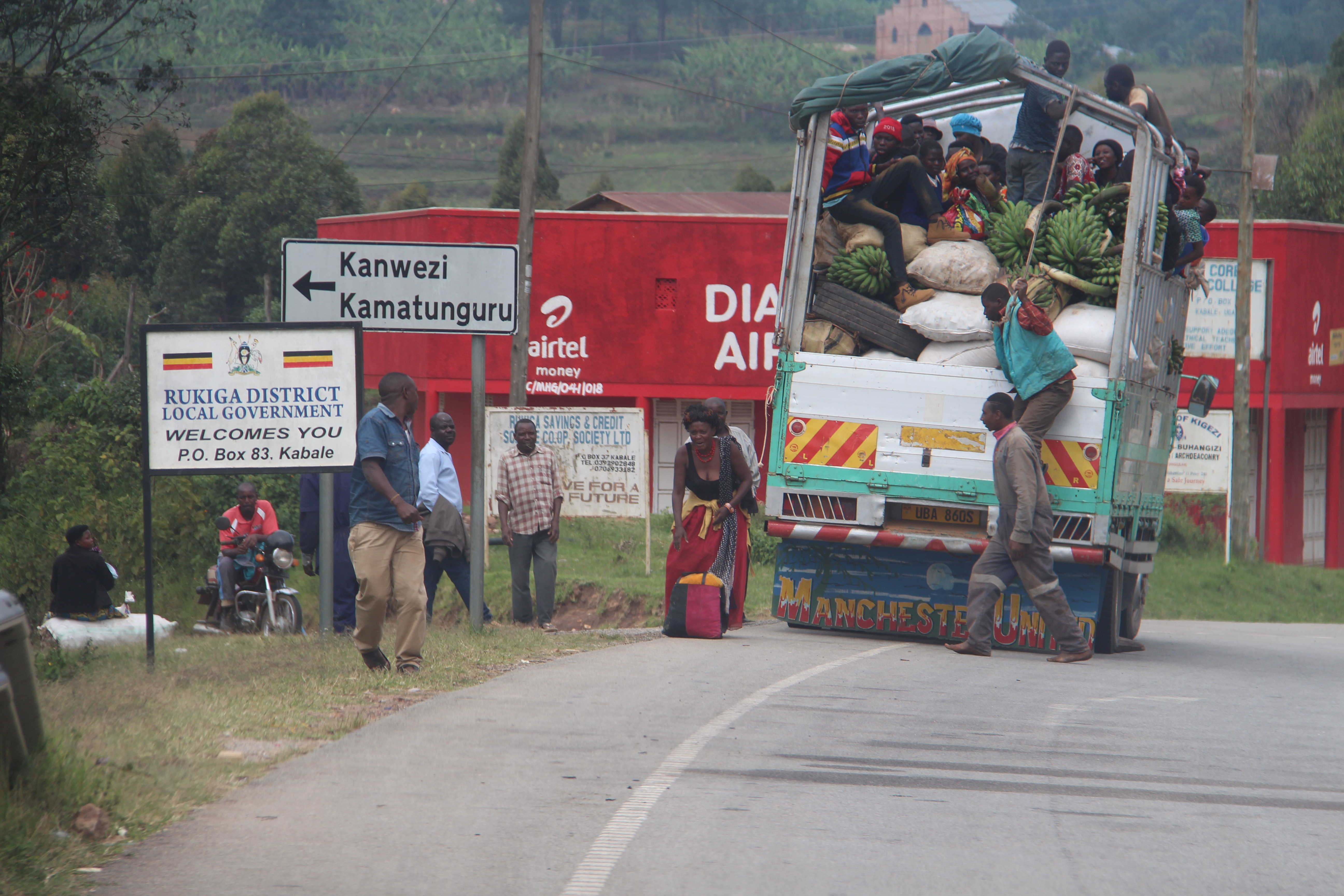
There are so many bikes
and motor bikes, which they call “boda-bodas”. I am honestly so impressed with
the things that the people are able to carry on their bikes and on their heads.
I see bikes laden with four of five giant bunches of bananas, men riding with
20 foot long wooden planks balanced on one shoulder, and women carrying 30
pound sacks of beans on their heads and small children on their backs. I am
struck with what a blessing it is to have a car- a means of easy travel, a way
to transport goods, protection from the elements. The majority of people here
don’t have these blessings. They walk for miles and miles (or should I say,
kilometers and kilometers), exerting a vast amount of physical strength and
endurance to carry what they need to live and take it back to their homes. I am
so impressed with their strength and resilience. I feel like there is an attitude
here of “you take what life gives you and you go from there.” They don’t waste
their breath complaining about their circumstances or the difficulties of their
lives or tropical diseases or the things that they lack. They are happy with
what they have, and know that they can make do with what they don’t.
I honestly believe I enjoyed the drives to and from the safari more than
I did the actual safari! The safari, or game drive as they call it, was so much
fun. We sat on top of the van and got right up next to zebras, giraffes,
warthogs, and so many more amazing animals! Honestly zebras just don’t seem
real. How could an animal be so cool and crazy and stand out so much in the
wild and have survived this long? Just some food for thought there. All in all,
it was an amazing weekend away, and I am excited to get back to work!
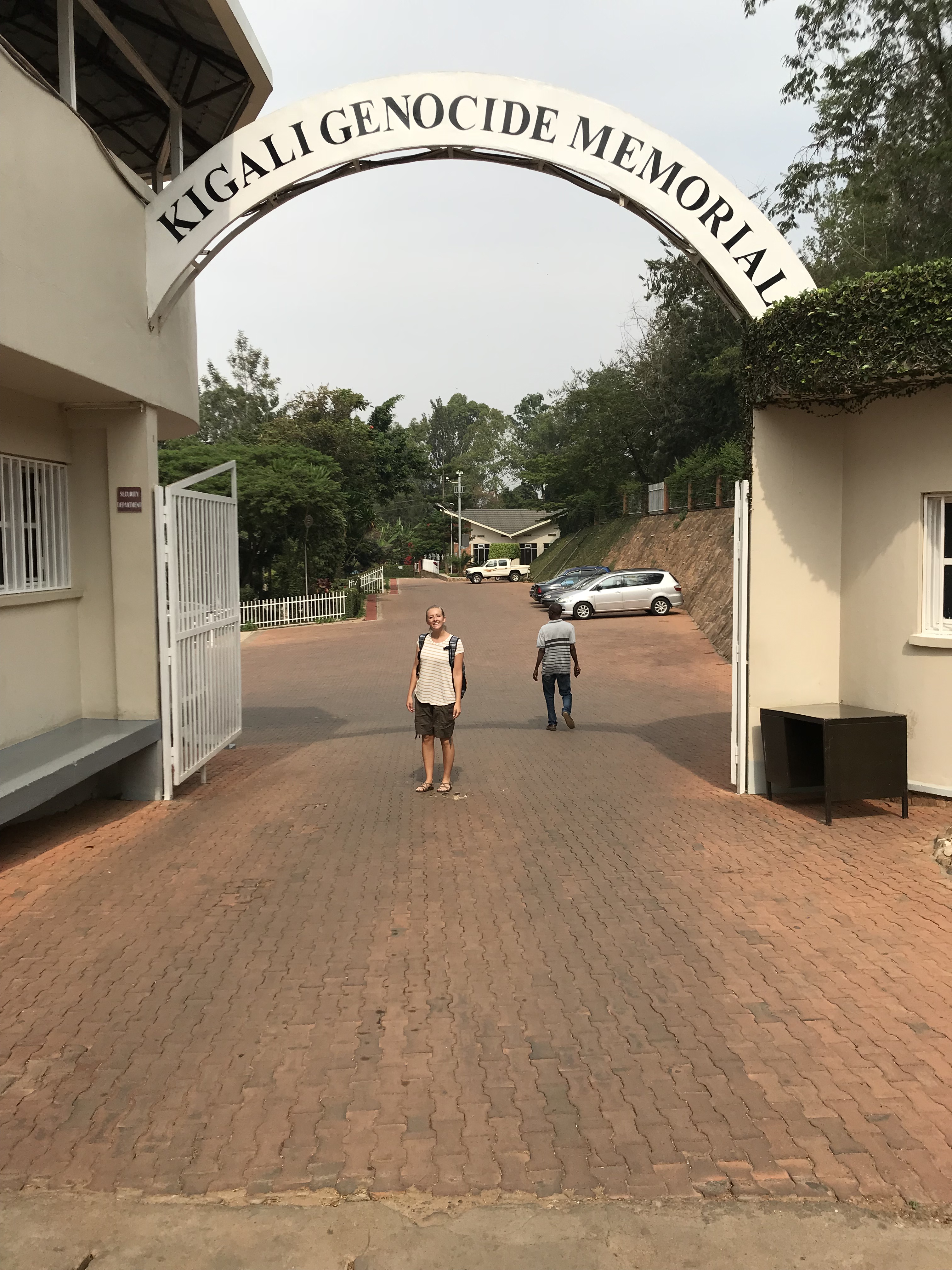
Week one has been literally so incredible! We arrived in Rwanda on Sunday and stayed the night at a hostile. The morning after, we went to a genocide museum. It was such an amazing and sobering experience. I was really touched by what they call the Children’s Room. They have big pictures of adorable children that were tragically killed because of their ethnicity. A plaque beneath the photos gave little tid-bits of information about them; their favorite food, favorite activity, a fun fact. It also said how they died. I was so saddened to see the horrible ways that these poor children perished. From what I gathered at the museum, Rwanda feels that most of the world turned a blind eye when over a million Tutsis were being slaughtered, and did not get involved or send aid that could have saved so many lives. I wasn’t alive at the time, but their desperation inspired me to get involved and do more when I see injustice in the world.
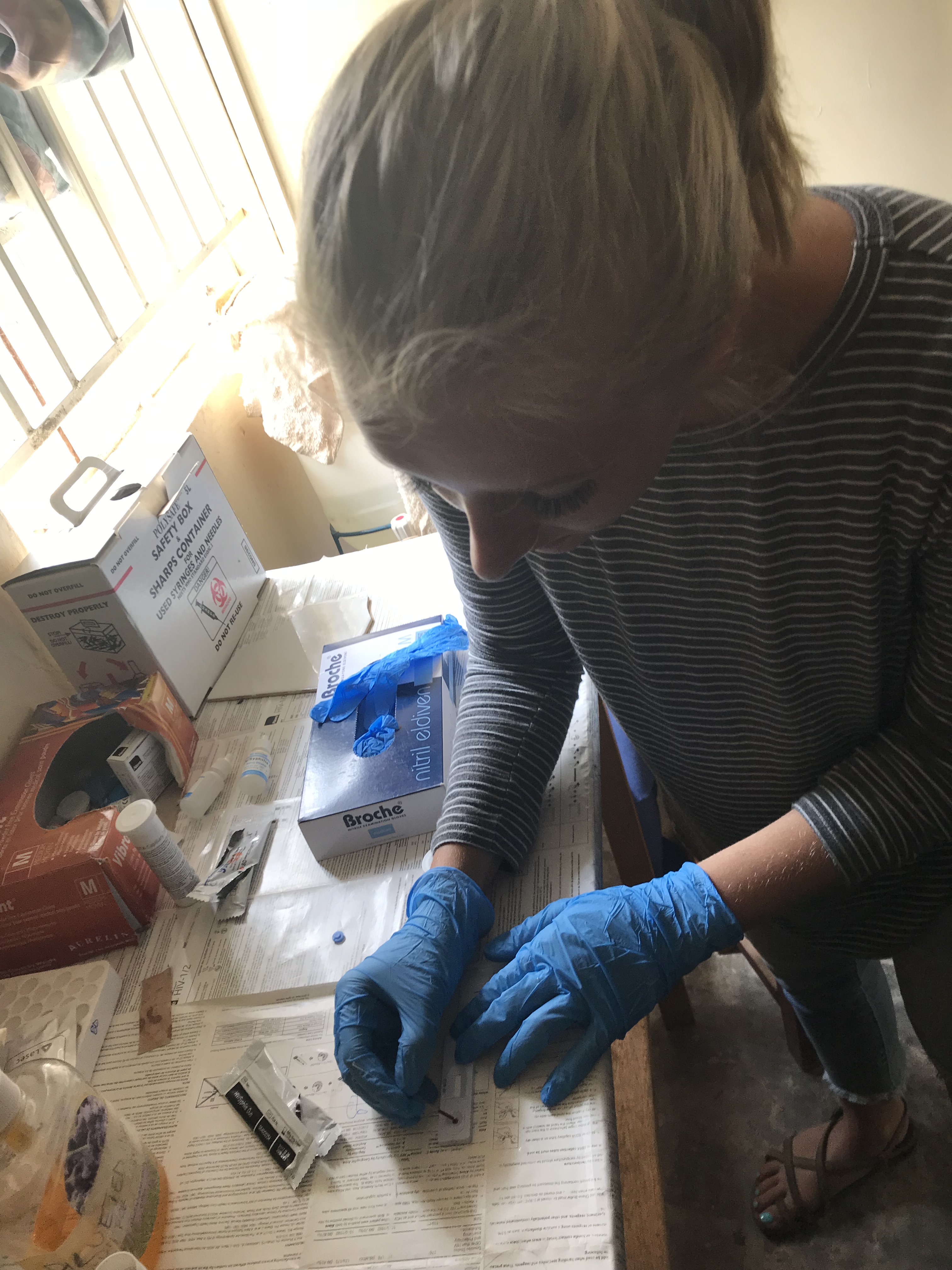
Having experienced the memorial and begun to understand more about African culture, we crossed the border into Uganda! After several days of training, orientation, and lecture, we were finally able to get to work. KIHEFO has four main clinics here in Kabale; maternal clinic, HIV/AIDS clinic, general clinic, and nutrition center. I began working in the maternal clinic. I observed as a pregnant woman was admitted, had her vitals taken, received a physical examination, was prescribed medication, was given an HIV and syphilis test, and had an ultrasound done. When the next patient came in, I was shocked when the nurse practitioner said, “Go ahead, examine her.” Under her supervision, I performed each task listed above from beginning to end, asking questions and receiving help along the way. My favorite part was taking the patient into the lab and performing the blood tests. I felt so useful, and I was so happy when I got to tell one patient that she was expecting a baby boy! Her smile was so big, it warmed my heart. I am so excited to dive into the work and be able to help, serve, and educate the Ugandan people.

 Uganda Maternal/Child health and HIV